
A sip of ice water or a bite of cold ice cream shouldn't leave you wincing. When it does, something has changed in your mouth and it's worth figuring out what.
If your teeth are suddenly sensitive to cold, the most common reason is that the protective enamel on your teeth has thinned or your gums have pulled back, exposing the softer layer underneath called dentin. Dentin is packed with tiny tubules that connect directly to the nerve inside your tooth, so cold air, cold drinks or even cold weather can trigger a sharp, short jolt of pain. For Mississauga patients, this is one of the most common concerns our team hears about, especially heading into the colder months.
Why Are My Teeth Suddenly Sensitive to Cold?
Sudden cold sensitivity usually means enamel has worn down or gums have receded, exposing the dentin layer beneath. Common causes include aggressive brushing, teeth grinding, acidic foods, harsh mouthwash, gum recession, a cracked tooth or a cavity. Mild cases often improve with a desensitizing toothpaste; sharp or lasting pain needs a dental exam to rule out decay or a crack.
What Causes Sudden Tooth Sensitivity to Cold?
Tooth sensitivity doesn't usually appear overnight without a reason. Something has exposed the dentin layer or irritated the nerve inside the tooth. The most frequent causes we see in our Erindale office include:
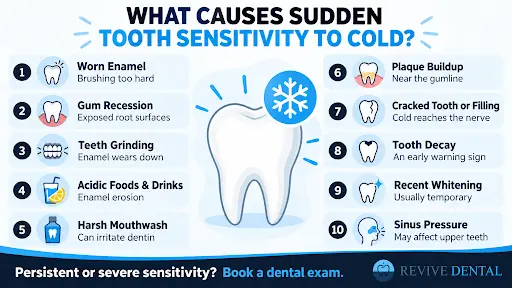
- Worn enamel from brushing too hard. Aggressive brushing, especially with a hard-bristled brush, gradually wears down enamel at the gumline.
- Gum recession. As gums pull back, the root surface underneath, which has no enamel coating, becomes exposed to temperature and pressure.
- Teeth grinding (bruxism). Grinding, often during sleep, wears down enamel over time and can make several teeth sensitive at once.
- Acidic foods and drinks. Citrus, tomatoes, coffee, wine and carbonated drinks gradually soften and erode enamel with repeated exposure.
- Harsh mouthwash. Some mouthwashes contain acids or high alcohol content that irritate exposed dentin and make sensitivity worse rather than better.
- Plaque buildup near the gumline. A layer of plaque sitting against the root surface can trigger pain on its own, separate from decay.
- A cracked tooth or old filling. A hairline crack or a filling that has started to leak lets cold reach the nerve directly, often in just one tooth.
- Tooth decay. A cavity can expose dentin long before it causes constant pain and cold sensitivity is often the first warning sign.
- Recent whitening treatment. Whitening products can cause temporary sensitivity that typically settles within a few days.
- Sinus pressure. Sinus congestion can sometimes cause sensitivity across the upper back teeth that mimics a dental problem.
Is It One Tooth or Are Several Teeth Suddenly Sensitive?
This distinction matters for figuring out what's going on. If teeth are suddenly sensitive to cold air across your whole mouth, the cause is usually something broad, like enamel erosion, grinding, plaque buildup or gum recession. If only one tooth reacts to cold, especially with lingering pain after the cold is gone, that points more toward a cavity, a crack or a problem with a specific tooth's nerve.
Patients sometimes describe this as their bottom front teeth suddenly sensitive or a single tooth in the back reacting sharply to a cold drink while the rest of the mouth feels normal. That pattern is a useful clue for your dentist and worth mentioning at your appointment.
What Is Dentin Hypersensitivity, Exactly?
Dentin hypersensitivity is short, sharp tooth pain that happens when exposed dentin reacts to a stimulus like cold air, cold drinks or sweet foods and then fades once the stimulus is removed. It's one of the most common reasons Mississauga and Erindale patients book an unplanned visit and research on Canadian dental patients suggests dentin hypersensitivity affects roughly 30% of adults between the ages of 18 and 64. It's uncomfortable, but in most cases it's manageable once the underlying cause is identified.
Why are My Teeth Suddenly Sensitive All of a Sudden if Nothing Has Changed?
Patients often say nothing has changed, but enamel wear and gum recession happen gradually over months or years. The sensitivity itself can still feel sudden because it crosses a threshold you notice all at once, often triggered by a change in weather, a new cold drink habit or a recent dental cleaning that removed built-up tartar and exposed a sensitive area underneath. Gum health plays a bigger role here than most people expect. The Canadian Dental Association notes that roughly 7 in 10 Canadians experience some form of gum disease during their lifetime and receding gums from gum disease are a frequent, quiet cause of cold sensitivity.
What Happens if Sensitive Teeth are Left Untreated?
Sensitivity itself isn't dangerous, but ignoring the underlying cause can let a smaller problem grow into a bigger one. Left unaddressed, the issues behind sudden sensitivity can lead to:
- A cavity progressing until it reaches the nerve and requires more extensive treatment
- Gum disease advancing and affecting the bone that supports your teeth
- A small crack spreading further into the tooth
- Pain that shifts from occasional and sharp to constant and harder to manage
Catching the cause early, rather than just masking it with toothpaste, is usually the simpler and less costly path.
When Should I See a Dentist About Sensitive Teeth?
A little sensitivity after a cleaning or a whitening treatment is normal and usually passes within a few days. Book a visit at our Mississauga office near Erindale GO Station and UTM if you notice any of the following:
- Sensitivity that lasts more than one to two weeks
- Pain that lingers well after the cold is gone, rather than fading immediately
- Sensitivity in only one tooth, especially with swelling or a visible chip
- Sharp pain when biting down, not just with cold
- Extremely sensitive teeth all of a sudden across most of your mouth, which can signal significant enamel loss or grinding
- Any sensitivity paired with a headache, jaw soreness or noticeable tooth grinding at night
How Can I Relieve and Help Prevent Sensitive Teeth?
A few daily habits can both ease current discomfort and help stop new sensitivity from developing:
- Switch to a soft-bristled toothbrush and use gentle, circular strokes rather than scrubbing.
- Use a desensitizing toothpaste containing potassium nitrate or stannous fluoride for two to four weeks before judging results and consider dabbing a small amount on the sore spot before bed.
- Check your mouthwash label. If it's acidic or high in alcohol, ask about a gentler, fluoride-based alternative.
- Cut back on acidic foods and drinks like citrus and pickles or rinse with water afterward instead of brushing right away.
- Avoid extreme temperature swings, like alternating hot coffee and ice water.
- Keep up with regular cleanings so plaque doesn't build up along the gumline.
- If you suspect grinding, ask about a night guard at your next visit.
These steps help manage symptoms and lower your risk going forward, but they don't address an underlying cavity or crack, which is why persistent sensitivity still needs an exam.
What Will a Dentist Do About Sudden Cold Sensitivity?
At your visit, the dentists at Revive Dental Clinic will start with a clinical exam and, when needed, digital X-rays to check for decay, a crack or bone loss around the tooth. From there, treatment depends on the cause:
- Fluoride varnish applied directly to the tooth can strengthen enamel and reduce discomfort within days.
- A desensitizing agent or sealant placed over exposed dentin can block pain signals at the source.
- Bonding can cover an exposed root surface where gum recession has left it unprotected.
- A filling treats a cavity causing sensitivity and, for CDCP-eligible patients, is covered under the Canadian Dental Care Plan without needing pre-authorization.
- A crown may be recommended for a cracked or heavily worn tooth that needs full protection.
Dr. Shruti Mehta and Dr. Parneet Kaur Dhillon, both general dentists at Revive Dental Clinic, will walk you through which option fits your specific tooth before any treatment begins.
If you're near Erin Mills, Streetsville, Cooksville, Clarkson or Port Credit, our Creditview Road location near Credit Valley Hospital is a short drive for patients across the Mississauga area and CDCP coverage applies the same way regardless of which Mississauga neighbourhood you're coming from.
Sudden cold sensitivity is common and in most cases it's manageable once you know the cause. If a cold drink has been making you wince for more than a week or two, book an appointment with a dentist in Mississauga at Revive Dental Clinic or explore our dental cleaning page to see how a professional cleaning and exam can catch the cause early.
Frequently Asked Questions About Sudden Tooth Sensitivity
1. How do I fix my teeth being sensitive to cold?
Start with a desensitizing toothpaste and a soft-bristled brush for two to four weeks. If sensitivity continues or is limited to one tooth, a dental exam is needed to check for a cavity, crack or gum recession that requires treatment.
2. Why did my tooth become sensitive to cold all of a sudden?
A single tooth reacting suddenly to cold usually points to a cavity, a crack, a leaking filling or recent dental work. Unlike general sensitivity across several teeth, one-tooth sensitivity is more likely to need a specific fix, not just a toothpaste switch.
3. Can tooth sensitivity fix itself?
Mild sensitivity from a recent cleaning or whitening treatment often fades within a few days on its own. Sensitivity caused by enamel wear, gum recession or a cavity will not resolve without treatment and typically gets worse if ignored.
4. Why are all my teeth so sensitive all of a sudden?
Widespread sensitivity across most or all teeth is usually tied to enamel erosion from acidic foods, aggressive brushing or teeth grinding or to broader gum recession. A dental exam can pinpoint which factor is driving it in your case.
5. Is sudden tooth sensitivity a dental emergency?
Not usually. Sensitivity on its own rarely needs same-day emergency care. It becomes urgent if it's paired with swelling, a visible crack or pain that keeps you up at night, which can point to a deeper infection.